 Ask Alvin (AI Chat)
Choosing Between 301 and 302 Redirects
Redirect Type controls the HTTP status code returned when a redirect is triggered.
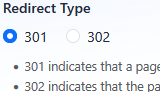
301 Redirects
Use 301 when the original page has permanently moved to a new location.
A 301 redirect tells browsers and search engines that the old URL should be treated as permanently replaced by the new destination.
302 Redirects
Use 302 when the original page has moved temporarily.
A 302 redirect tells browsers and search engines that the move is temporary.
Which One to Use
In most long-term website cleanup or page replacement situations, 301 is the expected choice. Use 302 only when the destination is temporary and the original URL is expected to become valid again later.
Learn More
For instructions on creating the redirect itself, see Adding or Editing a Redirect.